Under the National Education Policy (NEP) 2020, the curriculum follows the 5+3+3+4 structure, replacing the traditional 10+2 pattern. The framework is designed according to the developmental stages of children and promotes holistic, competency-based, and experiential learning.
| NEP Stage | Age Group | Classes | Key Focus |
|---|---|---|---|
| Foundational Stage (5 Years) | 3–8 Years | Preschool (Nursery, LKG, UKG) + Classes I–II | Play-based learning, language development, foundational literacy & numeracy, social-emotional learning. |
| Preparatory Stage (3 Years) | 8–11 Years | Classes III–V | Discovery, experiential learning, reading, writing, numeracy, art integration and environmental awareness. |
| Middle Stage (3 Years) | 11–14 Years | Classes VI–VIII | Conceptual understanding, subject-based learning, coding, vocational education, critical thinking and project-based learning. |
| Secondary Stage (4 Years) | 14–18 Years | Classes IX–XII | Multidisciplinary education, competency-based learning, flexible subject choices, career guidance, life skills and holistic development. |
Every student becomes a member of one of the four school houses, encouraging leadership, teamwork, discipline and healthy competition throughout the academic year.
The House System motivates students to participate actively in academics, sports, cultural events, leadership programmes and community activities while fostering unity and school spirit.
Students regularly participate in Inter-School, District, State and National level competitions including NTSE, JEE, NEET, IISER, KVPS, Aryabhatta Mathematics Olympiad, Robotics Championship, Quiz Competitions, Science Exhibitions, Debate, Cultural Events, Sports Championships and many other talent-based competitions.
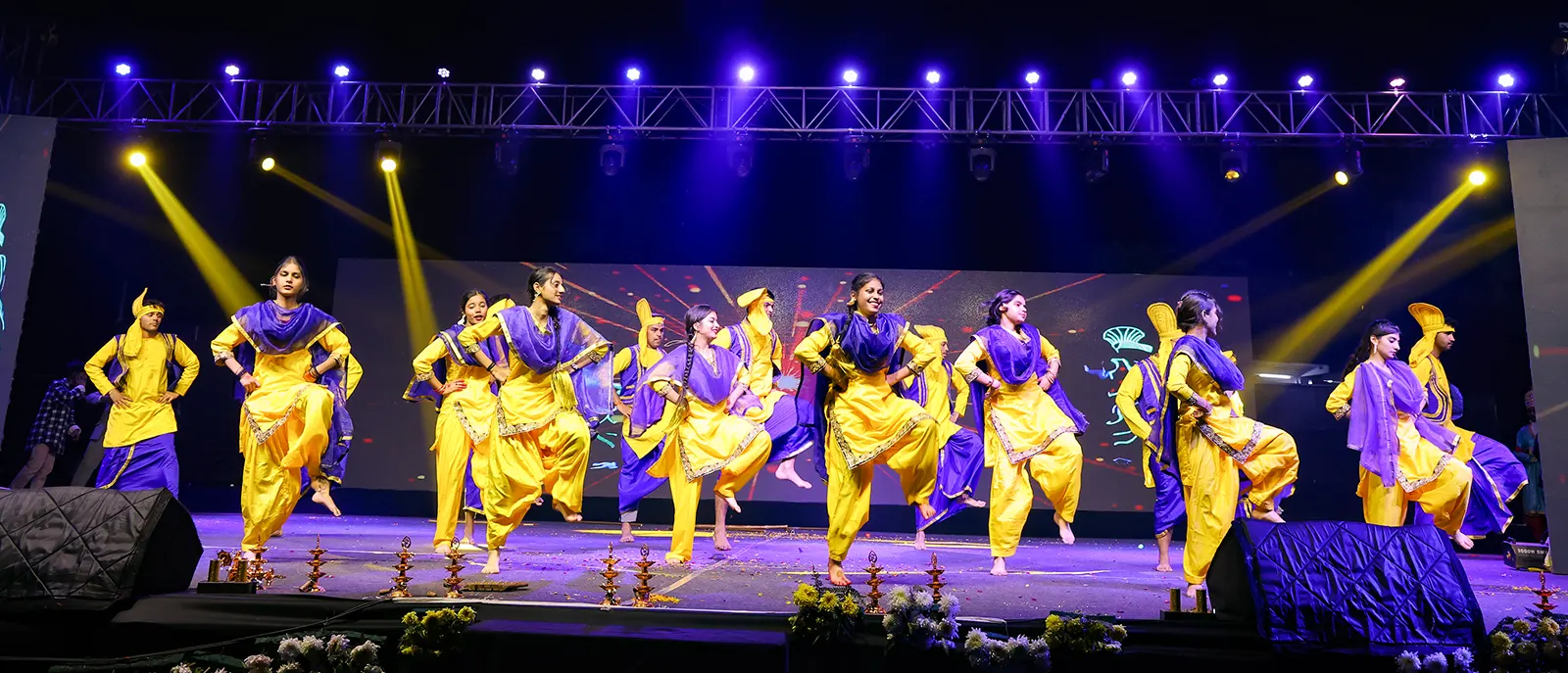
Annual Day serves as a vibrant platform for students to showcase their talent, creativity, confidence and artistic excellence through cultural performances and stage presentations.
Inspired by Howard Gardner's Theory of Multiple Intelligences, Surajkund International School recognizes that every child possesses unique talents and learning styles. Our teaching methodology nurtures individual strengths through experiential learning, creativity, collaboration, research, innovation and hands-on activities.
Beyond textbooks, students learn through exploration, technology integration, real-life experiences, art, sports and project-based learning. This learner-centric approach develops confident, compassionate, creative and responsible individuals who are prepared for lifelong learning and future challenges.
We place students at the heart of the learning process, encouraging curiosity, active participation, independent thinking, and self-expression in every classroom.
Students engage in hands-on, interdisciplinary projects that connect classroom concepts with real-world situations, promoting creativity, teamwork, research, and problem-solving skills.
We believe that learning can happen anywhere and anytime. Through experiential activities, technology-enabled education, field visits, collaborative experiences, and community engagement, students develop practical knowledge and essential life skills.
By embracing Multiple Intelligence and innovative pedagogies, we create an inclusive learning environment where every child is inspired to excel academically, socially, emotionally, and creatively—preparing them to become responsible global citizens and lifelong learners.